Saturday, June 28, 2008

HEALTH MATTERS: Recovery and rehab following a stroke
Rehabilitation nursing is also an integral part of the process for close patient monitoring, education and medication teaching. The patients work with nursing staff throughout the day and night on applying skills taught during rehabilitation therapies.
The ultimate goal of inpatient rehabilitation is to provide patients with the building blocks to continue their recovery either at home with or without assistance or in a longer-term care facility.
After a loved one experiences a stroke, it is often left to family members to determine where the patient will receive treatment. Finding the best rehabilitation program, especially during a stressful and emotional time, can be an overwhelming and daunting task.
In evaluating rehabilitation programs, the National Stroke Association recommends choosing a program that is accredited by the Commission on Accreditation of Healthcare Organizations (CARF). Requirements for CARF accreditation include:
• A medical director and doctors who are board-certified in rehab-related specialties, such as physiatry or neurology.
• A team approach for patient care.
• Regular rehab team meetings to evaluate each patient’s progress.
• Involvement of family members in the program, and regular family meetings to keep them up- to-date with the progress of their loved ones.
• Patient and family education and support.
• A defined process for handling emergencies.
• Ongoing assessment of each patient’s progress in terms of abilities and level of independence in activities of daily living, such as dressing and walking.
Experiencing a stroke is a significant life change for survivors and their families, and rehabilitation and recovery take time. With patience and commitment, however, many people realize there is life after stroke.
For more information about University Medical Center at Princeton’s CARF-accredited Acute Rehabilitation Unit or to find a physician with Princeton HealthCare System, call (888) 742-7496 or visit www.princetonhcs.org. If you would like to receive a free magnet card listing the signs and symptoms of stroke to place on your refrigerator or near your phone, please call UMCP at (609) 430-7107.
Dr. Carol Sonatore is the medical director of the Acute Rehabilitation Unit at University Medical Center at Princeton and is chair ...........
Sunday, March 16, 2008
UCSC project aims to provide a virtual speech therapist via cell phone

Researchers at the University of California, Santa Cruz, have received funding from Microsoft Research to develop a virtual speech therapist, accessible on a cell phone, to aid stroke survivors in Malaysia. The self-contained language rehabilitation program will use a computer-generated talking head that provides realistic speech and mimics the natural movements of lips, tongue, and jaw.
About 40,000 people suffer from stroke every year in Malaysia, and communication impairments are common among stroke survivors, said principal investigator Sri Kurniawan, an assistant professor of computer engineering in the Baskin School of Engineering at UCSC. As in many developing countries, however, access to speech therapy is limited. A shortage of speech therapists in Malaysia is one obstacle, and patients often have difficulty traveling to existing speech therapy centers.
"This project aims to create a virtual speech therapist on a cell phone," Kurniawan said. "Initially, the patient will meet with a therapist to work out individualized therapy programs. Then the programs will be loaded onto a cell phone and given to the patient."
Learning disabilities linked to later language problems

A Chicago university has suggested that a degenerative condition that affects language is linked with learning disabilities.
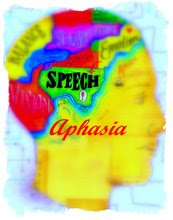
Scientists at Northwestern University found that people who suffer with primary progressive aphasia, a neurodegenerative condition affecting language, are more likely to have had a history of learning disabilities.People who have the condition experience deterioration in their language capabilities as they get older. The signs of aphasia include struggling to speak expressively, trouble understanding speech, and difficulty with writing and reading. In the report, the scientists state: "This relationship may exist in only a small subgroup of persons with dyslexia without necessarily implying that the entire population with dyslexia or their family members are at higher risk of primary progressive aphasia."The effects of aphasia differ depending on the individual and the symptoms can sometimes be eased by working with a speech therapist.Northwestern University's study has been published in the February edition of Archives of Neurology.
Saturday, March 15, 2008
Subscribe to:
Comments (Atom)