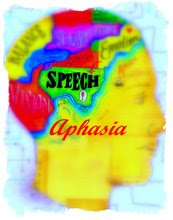
Jack Schofield, the technology expert at The Guardian was asked about alternatives to using Open Office's predictive text for someone who has acquired asphasia after having a stroke.
There are several programs that are designed for people with physical impairments or severe dyslexia that should be more useful than Open Office's predictive text or Microsoft Office's AutoComplete.NEXT...
Friday, July 17, 2009
Easier word processing for someone with aphasia
Aphasia and text writing.
Background: Good writing skills are needed in almost every aspect of life today, and there is a growing interest in research into acquired writing difficulties. Most of the findings reported so far, however, are based on words produced in isolation. The present study deals with the production of entire texts. Aims: The aim was to characterize written narratives produced by a group of participants with aphasia. Methods & Procedures: Eight persons aged 28-63 years with aphasia took part in the study. They were compared Next...
Wednesday, April 29, 2009

Friday, April 24, 2009
Aphasia/dysphasia: can't talk, not allowed to talk.
Visiting Dyscover this morning; http://dyscover.ndo.co.uk: this is a local support group for people with aphasia or dysphasia – no speech or disrupted speech, usually because of stroke or brain disease. As you talk with them, you have to wait while they find the words they want to say, and test out what you have understood to make sure you picked it up right. One interesting positive for the group was the chance to talk about interesting topics in discussion groups. At home, they have discussed everything with their spouse, and visitors often do not wait comfortably for them to take time to speak, so they don’t get the chance to spread their wings in a discussion like the rest of us do over coffee or a meal break.
Thursday, April 23, 2009
Wednesday, January 21, 2009
http://www.theaudeo.com/
The "AUDEO" will give me Dave (age 41, diagnosed with ALS in 2004) | The Audeo is being developed to create a human-computer interface for communication without the need of physical motor control or speech production. Using signal processing, unpronounced speech representing the thought of the mind can be translated from intercepted neurological signals. |
Do you think the Audeo could help you or somebody you know? If so, click here. | |
By interfacing near the source of vocal production, the Audeo has the potential to restore communication to people who are unable to speak. The proposed solution is a featherweight wireless device resting over the vocal cords capable of transmitting neurological information from the brain. Using data analysis, this information can be processed into synthesized speech or a menu selection capable of conveying the basic necessities of human life. Current Applications of the Audeo: Speech – After a recent breakthrough, we have developed a method to exceed individual words and have shown the ability to produce continuous speech with high accuracy from the neurological signals. Wheelchair Control – By incorporating the Audeo with additional hardware, we have successfully controlled a wheelchair without the need of physical movement. To see the wheelchair in action, watch the wheelchair demonstration. If you are a researcher, scientist, or interested in more information about the technology behind The Audeo, please sign up here. We will send you more information or demonstration when it becomes available. This technology is being developed in collaboration with the Rehabilitation Institute of Chicago and the University of Illinois and supported by the National Center for Supercomputing Applications and National Instruments.   | |

Saturday, June 28, 2008
Service with a smile
Therapy centre provides a physical, mental boost
Posted By BY HEATHER IBBOTSON, EXPOSITOR STAFF
Updated 21 days ago
Her husband, Ron, said that attending the centre has "been a godsend."
Twice a week, Ron drops Dora off for a morning of activity and therapy.
"It's a good break for me," he said. "When she's here I have no worries at all."
Most of the clients are seniors, but a few are in their 40s or 50, she said.
"We try to maintain their level of independence," Santilli said.
The centre offers clients a variety of activities and therapies, individually and as a group.
Even something as simple as a game of bingo can be therapeutic, Santilli said.
"I came out of my shell," she said. "I really enjoy it here."
For more information, visit www.artc.ca or call 519-753-1882.
Subscribe to:
Comments (Atom)