B lood Clots/Stroke - They Now Have a Fourth Indicator, the Tongue
I will continue to forward this every time it comes around!
STROKE:Remember the 1st Three Letters....S.T.R.
My nurse friend sent this and encouraged me to post it and spread the word.
I agree.
If everyone can remember something this simple, we could save some folks.
Seriously..
Please read:
STROKE IDENTIFICATION:
During a BBQ, a friend stumbled and took a little fall - she assured everyone that she was fine (they offered to call paramedics) .she said she had just tripped over a brick because of her new shoes.
They got her cleaned up and got her a new plate of food. While she appeared a bit shaken up, Ingrid went about enjoying herself the rest of the evening
Ingrid's husband called later telling everyone that his wife had been taken to the hospital - (at 6:00 pm Ingrid passed away.) She had suffered a stroke at the BBQ. Had they known how to identify the signs of a stroke, perhaps Ingrid would be with us today. Some don't die. they end up in a helpless, hopeless condition instead.
It only takes a minute to read this...
A neurologist says that if he can get to a stroke victim within 3 hours he can totally reverse the effects of a stroke...totally. He said the trick was getting a stroke recognized, diagnosed, and then getting the patient medically cared for within 3 hours, which is tough.
RECOGNIZING A STROKE
Thank God for the sense to remember the '3' steps, STR . Read and Learn!
Sometimes symptoms of a stroke are difficult to identify. Unfortunately, the lack of awareness spells disaster. The stroke victim may suffer severe brain damage when people nearby fail to recognize the symptoms of a stroke.
Now doctors say a bystander can recognize a stroke by asking three simple questions:
S *Ask the individual to SMILE.
T *Ask the person to TALK and SPEAK A SIMPLE SENTENCE (Coherently)
(i.e.. It is sunny out today.)
R *Ask him or her to RAISE BOTH ARMS.
If he or she has trouble with ANY ONE of these tasks, call emergency number immediately and describe the symptoms to the dispatcher.
New Sign of a Stroke -------- Stick out Your Tongue
NOTE: Another 'sign' of a stroke is this: Ask the person to 'stick' out his tongue.. If the tongue is 'crooked', if it goes to one side or the other, that is also an indication of a stroke.
A cardiologist says if everyone who gets this e-mail sends it to 10 people; you can bet that at least one life will be saved.
I have done my part. Will you?
Friday, September 25, 2009
Thank you for June C.
Sunday, July 19, 2009
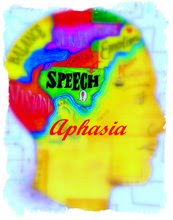
Coping with aphasia

From Washington state to the Sturgis Motorcycle Rally in South Dakota, Yuman Joseph Boze likes to travel.
But his plans were put on hold after he suffered a stroke in March 2008.
Now Boze has been diagnosed with aphasia, a disorder that affects people's communication skills.
Corinna Atchly, a speech language pathologist with Yuma Rehab, said there are two types of aphasia: receptive and expressive.
Receptive, she said, affects a patient's ability to understand and make sense of what he or she reads, hears or sees. Patients with expressive aphasia, she said, have difficulty verbalizing wants and needs, have trouble writing or making gestures. Next..
Friday, July 17, 2009
Easier word processing for someone with aphasia
Jack Schofield, the technology expert at The Guardian was asked about alternatives to using Open Office's predictive text for someone who has acquired asphasia after having a stroke.
There are several programs that are designed for people with physical impairments or severe dyslexia that should be more useful than Open Office's predictive text or Microsoft Office's AutoComplete.NEXT...
Aphasia and text writing.
Background: Good writing skills are needed in almost every aspect of life today, and there is a growing interest in research into acquired writing difficulties. Most of the findings reported so far, however, are based on words produced in isolation. The present study deals with the production of entire texts. Aims: The aim was to characterize written narratives produced by a group of participants with aphasia. Methods & Procedures: Eight persons aged 28-63 years with aphasia took part in the study. They were compared Next...
Wednesday, April 29, 2009

Friday, April 24, 2009
Aphasia/dysphasia: can't talk, not allowed to talk.
Visiting Dyscover this morning; http://dyscover.ndo.co.uk: this is a local support group for people with aphasia or dysphasia – no speech or disrupted speech, usually because of stroke or brain disease. As you talk with them, you have to wait while they find the words they want to say, and test out what you have understood to make sure you picked it up right. One interesting positive for the group was the chance to talk about interesting topics in discussion groups. At home, they have discussed everything with their spouse, and visitors often do not wait comfortably for them to take time to speak, so they don’t get the chance to spread their wings in a discussion like the rest of us do over coffee or a meal break.